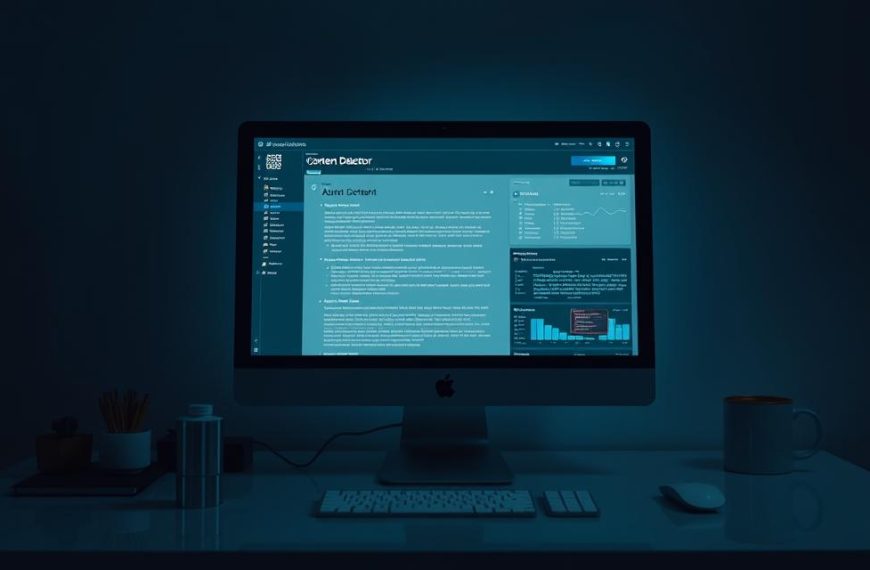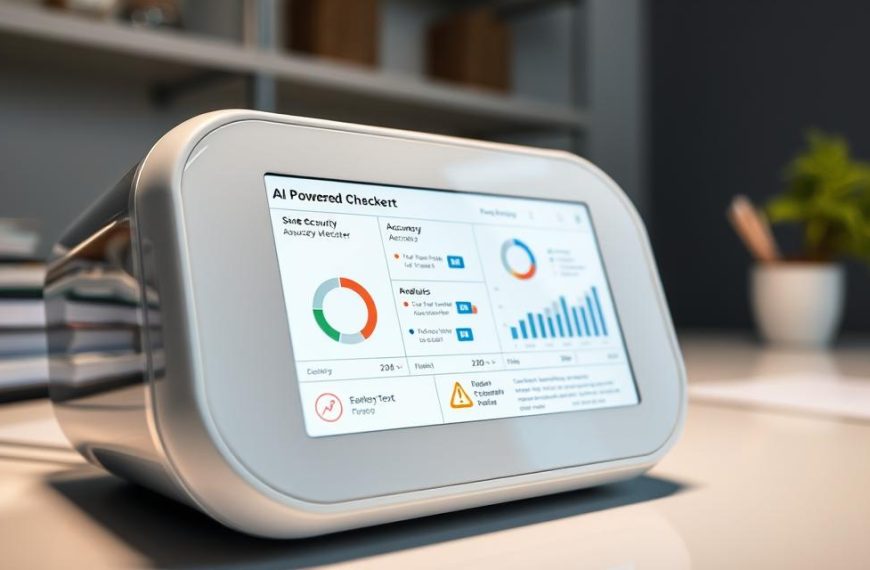


In academic and professional circles, the integrity of written work is under close watch. It’s expected that essays are original, showing a person’s understanding and hard work.
The rise of artificial intelligence writing tools has opened up new challenges. Students and researchers can now easily create text. This raises big questions about who should be credited as the author.
Many places are now setting rules to keep things fair. They even block tools like ChatGPT to protect original work. This makes a reliable AI content detector very important.
These tools are key for those who value quality and originality. They check if writing looks like it was made by a machine. This helps ensure that work is genuine.
This guide will show how these tools work and their benefits. It will also teach you how to use them well. This way, you can meet today’s writing standards with confidence.
The Evolving Challenges of Academic and Professional Writing
Today’s writers face complex integrity issues, far beyond simple copying. The digital age has made info easy to find but also muddled what’s original.
Old-school plagiarism, copying text word for word without credit, is a big problem. But it’s just the start. Now, writers deal with sneaky, hard-to-spot ways of borrowing ideas.
These new challenges make it tough for both writers and those who check their work:
- Paraphrasing Plagiarism: Changing someone else’s words but not giving credit, which can slip past basic checks.
- Patchwork or Mosaic Plagiarism: Mixing bits from different sources to look like new, but it’s not really original.
New tools like ChatGPT and Google’s Gemini have changed the game. They can write essays, reports, and articles that seem new. This makes it hard to tell if it’s okay to use them for help or if it’s cheating.
This has created a grey area. Is it okay to use an AI for an outline? Or to fix a bad paragraph? Companies and schools are trying to figure this out. Firms like Originality.ai are blocking AI tools, and teachers are looking for ways to check if work is real.
So, checking work is more important than ever. Just trusting the writer isn’t enough anymore. Good plagiarism detection must find copied text, AI work, and bad paraphrasing. It’s about keeping writing real in a world where humans and AI work together.
Defining the Modern AI Checker for Essays
A modern AI checker for essays is more than just a plagiarism detector. It’s a complex tool built on advanced computational linguistics. These tools check text thoroughly, looking at both copied content and the writing’s nature and origin.
This software combines two key areas of artificial intelligence: Natural Language Processing (NLP) and Machine Learning (ML). They work together to understand, analyse, and judge written work deeply. This results in a detailed originality score.
The Core Technologies: NLP and Machine Learning at Work
Natural Language Processing is the base. It lets the AI understand human language. The tool examines sentence structure, grammar, and meaning. It sees how ideas are connected, like a human reader, but with precision.
Machine Learning adds the smarts. Developers train ML models on huge datasets. These datasets include many documents, as GPTZero shows.
This training is key. The model learns to spot the signs of AI text. It looks at patterns like predictability, sentence structure, and word choice.
- Predictability: AI text often has a more uniform, predictable word choice.
- Sentence Structure: Repetitive or perfect syntactic patterns are signs.
- Word Choice: Uncommon or inconsistent terminology usage is noted.
The checker then calculates a probability. This is often shown as a percentage or a originality score. This score shows how likely it is that the text was AI-generated. It helps educators and professionals decide if a submission is genuine.
How AI Essay Checkers Safeguard Originality
AI essay checkers are key in stopping accidental plagiarism and cheating. They compare your work against huge databases. These databases have billions of web pages, academic papers, and books.
This check is fast, thanks to advanced algorithms. It looks for text matches in seconds. The aim is to spot issues early, not to blame. You get a detailed similarity report to check your work’s originality.
Interpreting Similarity Reports and Originality Scores
It’s important to understand the report. It gives you key info for quick action.
- Colour-Coded Highlights: Matches or paraphrased content are shown in your text. Different colours show different sources or match levels. Tools like Originality.ai highlight sentences for review.
- The Originality or Similarity Percentage: This score, like Grammarly’s, shows how original your work is. A low score means it’s mostly original. But, remember, common phrases or quotes are included, so check the context.
- Matched Source List: The report lists sources with matching text. You can check if it’s a proper citation or a mistake.
Top platforms give detailed, shareable PDF reports. Originality.ai says this lets you show your work’s originality to teachers or clients. It’s proof your work has been thoroughly checked.
When you get a report, go through it carefully. See if you need to paraphrase, add a citation, or if it’s a common term. A good similarity report helps you improve and prove your work is yours.
Elevating Writing Quality Through AI-Powered Analysis
Today’s AI writing tools are more than just spell-checkers. They act as coaches to improve your writing. They help you refine your work, not just fix mistakes. This change makes them partners in your creative journey.
These tools aim to show you how to make your writing better. They use deep analysis to check your text’s clarity and impact. This is a big step up from simple spell-checking.

Beyond Grammar: Assessing Clarity, Engagement, and Argument
A top AI checker looks at the heart of good writing. It checks if your writing is clear and easy to follow. It spots confusing parts and suggests ways to make it clearer.
It also looks at how engaging and toned your writing is. It checks your word choice and style. Tools like Grammarly help keep your tone consistent, whether it’s for school or work.
The biggest leap is in checking your argument’s strength. The AI looks at how well you support your points. It helps you make your essay more persuasive, not just grammatically correct.
Some tools offer extra insights. For example, Originality.ai uses readability scoring to help you connect with your audience. This helps you tailor your writing for different situations and goals.
The best feedback doesn’t just point out a flaw; it explains why a change strengthens the communication and offers a better path forward.
This detailed analysis gives you a clear picture of your writing’s power. It helps you make your work better, not just correct mistakes. You aim for excellence in your writing, not just getting it right.
The Compelling Advantages of Using an AI Essay Checker
Using an AI essay checker brings many benefits. It’s not just about finding plagiarism. It saves time, improves quality, and gives peace of mind to writers.
It offers instant, unbiased feedback. Unlike humans, AI checks text against vast databases and rules. This helps writers improve consistently.
- For Students: It’s a great tool for learning and self-improvement. It spots plagiarism, poor structure, and weak arguments. This helps students improve their work and maintain academic integrity.
- For Educators and Institutions: AI checkers are a first line of defence. They help screen lots of work, letting teachers focus on mentoring. This keeps standards high and the learning environment fair.
- For Professionals and Content Managers: Original, polished content is key in business. These tools protect brands by checking for plagiarism and ensuring clear messaging. They help maintain quality standards.
Users love the time-saving aspect. Grammarly shows that users feel more confident in their writing. This means less time spent on proofreading.
It has been phenomenal for our team. It’s not just about catching copy-paste; it’s about maintaining our quality standards effortlessly. An essential tool in our workflow.
The ability to prove originality is a big plus. Having a detailed report or quality score shows that work is original. This is great for students and freelancers.
Using an AI essay checker boosts confidence. It sets a high standard, improves writing, and ensures work is original and clear.
Selecting the Right AI Checker for Your Essay Needs
Choosing an AI essay checker is not simple. It’s about finding a tool that matches your goals. The market has many options, from plagiarism detectors to writing coaches. The right choice affects the quality of your feedback and the integrity of your work.
Start by thinking about what you really need. Are you looking for:
- Strict AI Detection: To check if a text was written by a human for compliance.
- Comprehensive Plagiarism Checking: To compare your work against a huge database of sources.
- Writing Quality Improvement: To get feedback on grammar, style, clarity, and argument strength.
- A Combined Solution: A platform that checks originality and offers editing features.
Many tools focus on one area. For example, Grammarly is great for improving language, while Turnitin checks for academic integrity. Knowing what you need helps narrow down your search.
Once you know what you’re looking for, check tools against key criteria:
Accuracy and False Positives: Look for tools with high accuracy rates, like 99%+. It’s also important to know their false positive rate. A low rate means they rarely mistake human writing for AI.
Depth of Reporting: Does the tool give a simple score or a detailed report? The best tools highlight specific issues, cite sources for plagiarism, and offer writing tips.
Supported Languages and Formats: Make sure the checker works with your language and file formats (like .docx, .pdf, pasted text).
Sensitivity and Model Selection: Some tools offer different models for different needs. For example, Originality.ai has models for general checks, academic writing, and detecting new AI content.
Choosing a model that fits your needs is key. This ensures you get accurate results.
Integration and Workflow: Think about how the tool fits into your workflow. Does it have a browser extension, a Word add-in, or a direct upload? Easy integration saves time and encourages use.
Cost Structure: Tools vary in price, from free to premium. Compare prices to features you need. A free grammar checker might be enough for casual use, but students may need a paid service for strict policies.
Also, consider ethics and official guidelines. If your university recommends a tool, start there. Use external checkers for personal improvement and before submitting, not to cheat.
By carefully evaluating your needs, you can find an AI essay checker that truly helps you improve your writing and maintain originality.
An Overview of Leading AI Checker Tools
The market for AI writing tools and originality detectors is filled with well-known names. These range from big names in education to personal tools. It’s important to know what each tool does best and when to use it.
Turnitin
Turnitin is a top choice for checking if work is original. It compares your work against a huge database of papers and web content.
Key Features and Strengths
Turnitin stands out for several key features:
- Massive Proprietary Database: Its huge database makes it very reliable for checking similarities.
- Comprehensive Similarity Reports: It gives detailed reports that show matched text and links to sources.
- Integration with Learning Management Systems (LMS): It works well with platforms like Canvas and Moodle, making it easy for teachers to use.
Primary Use Case and Considerations
Turnitin is mainly for schools and universities. Students usually get to it through their school.
It’s mainly for checking if work is original. It doesn’t give much feedback on grammar or how well you’ve argued your point. It’s a key check before you submit your work.
Grammarly
Grammarly has grown from a grammar checker to a full writing assistant. It helps improve your writing as you go, and it’s used by many.
Key Features and Strengths
Grammarly is known for being easy to use and helping a lot:
- Real-Time Writing Enhancement: It gives instant tips on grammar, tone, and clarity as you write.
- Integrated Plagiarism Checker: Its premium version has a good plagiarism detector that checks against web pages.
- AI Detection and Citation Generator: It can spot AI-written text and help with citations, making it a great all-in-one tool.
Primary Use Case and Considerations
Grammarly is great for making your writing better as you write. It’s not just for checking if your work is original.
It’s easy to use and helps a lot. But for very strict checks on originality, schools might prefer Turnitin.
QuillBot
QuillBot is mainly for rewriting and summarising text. It can help you change your writing style, but it’s important to use it right.
Key Features and Strengths
QuillBot is all about rewriting and making things shorter:
- Advanced Paraphrasing Tool: It has different modes to rewrite your text while keeping the meaning.
- Summariser: It can make long texts shorter and to the point quickly.
- Grammar Checker and Co-Writer: It also checks grammar and helps with writing together with someone.
Primary Use Case and Considerations
QuillBot is best for helping with your first draft. It’s good for getting ideas down or making complex texts easier to understand. But, it’s important to use it ethically.
Using it too much without understanding and citing properly can lead to plagiarism. It’s meant to help your writing, not replace it.
Scribbr and Other Specialised Platforms
There are also tools that focus on specific needs. Scribbr is popular for editing and plagiarism checks. Originality.ai is great for professionals and researchers.
Key Features and Strengths
These tools offer specialised help and advanced tools. Let’s look at Originality.ai:
- High-Accuracy AI Detection: It can spot AI-written text with great accuracy.
- Fact-Checking Capabilities: It checks if what you’ve written is true by comparing it to credible sources.
- Team Management Suite: It lets teams manage users, track scans, and keep an eye on projects.
Primary Use Case and Considerations
These tools are for those who need deep, detailed checks. They’re great for researchers, editors, or companies checking their content.
They might cost more, but they offer detailed checks. They’re not as good at giving general writing advice like Grammarly.
Choosing between Turnitin, Grammarly, QuillBot, or a special tool depends on what you need most. Do you need strict checks, help with writing, rewriting, or detailed content analysis?
Best Practices for Integrating an AI Checker into Your Workflow
Using an AI essay checker well means timing, reviewing, and learning. Don’t just use it at the end. See it as a partner in your writing.
Start with an iterative checking approach. Check your work at different stages. First, look for big structure or clarity issues. Next, refine your argument and tone. Lastly, polish grammar and check for originality, including ChatGPT detection.
Tools like “Deep Scan” help with this. They let you act on feedback right away, making your work better.
| Draft Stage | Primary Checker Focus | Actionable Outcome |
|---|---|---|
| First Draft / Outline | Clarity & Argument Strength | Make weak sections stronger and sharpen your thesis. |
| Second Draft | Flow, Tone, & Citation Accuracy | Work on smooth transitions and correct source use. |
| Final Draft | Grammar, Originality, & Final Polish | Fix small errors and understand your originality score. |
Don’t always trust what the checker says. It’s powerful but not perfect. Always critically engage with its suggestions.
Grammarly suggests a “holistic approach.” Use AI feedback as part of a bigger writing and review plan.
When the checker points out something, stop and think. Ask yourself:
- Is this change making my meaning clearer?
- Does it fit the needed tone?
- For originality flags, is it common knowledge, paraphrased, or needs a citation?
This way, the tool becomes a tutor. It helps you see why a sentence is weak or why it might look similar to others.
Use the feedback to build better writing habits. Notice patterns in your mistakes. If you always get flagged for passive voice, try writing more actively. If unclear antecedents are a problem, work on being more precise with pronouns.
Always be transparent about using AI. If it’s okay with your school or publisher, say so. Follow rules to keep your work safe and trustworthy. Knowing how a tool detects ChatGPT is part of using it right.
By using your AI checker wisely, reviewing feedback carefully, and using it ethically, you get the most out of it. It’s not just about a cleaner draft today. It’s about becoming a better writer tomorrow.
Understanding the Limitations and Ethical Dimensions
AI detection technology raises big questions about its accuracy and ethics. These tools help keep standards high but are not perfect. It’s important to know their limits for fair use.
No AI detector is 100% accurate. The results are based on probability, not certainty. This means there are two main types of mistakes: false positives and false negatives. A false positive is when a tool says human writing is AI-generated text when it’s not. A false negative is when AI text is missed.
These mistakes are not random. Studies show a big risk of detector bias. The algorithms often use data from native English speakers. This can lead to non-native speakers or those with unique writing styles being unfairly flagged.
AI detectors give a score, not a final say. They should guide human judgment, not replace it.
It’s key to know the difference between AI detection and plagiarism checking. Here’s a table that shows the main differences:
| Aspect | AI Text Detection | Traditional Plagiarism Checking |
|---|---|---|
| Primary Purpose | Identifies patterns suggestive of machine-generated prose. | Finds direct matches to existing published sources. |
| Core Methodology | Analyses writing style, syntax, and predictability using NLP models. | Compares text against a database of web pages and publications. |
| Nature of Result | Probabilistic score (e.g., “70% likely to be AI-generated”). | Percentage of matched text and source links. |
| Key Limitation | High risk of bias and false accusations against atypical writing. | Can’t detect original AI-generated text not copied from elsewhere. |
The technical limits of AI detection lead to big ethical questions. The main ethical rule is that AI checker results should never lead to punishment without human review. An automated score should start a discussion, not a penalty. It’s up to educators and managers to consider the context and the writer’s history.
Also, what’s considered acceptable help is changing. The debate is about where editing ends and cheating starts. Using AI for grammar is okay, but using it for whole arguments is not. Clear policies and open talks about tool use are needed.
AI essay checkers are useful tools, not perfect judges. They work best when users know their limitations and think critically about the results. Understanding both the strengths and weaknesses of AI technology is essential for ethical and effective use.
The Future Trajectory of AI in Writing and Assessment
The next AI essay checkers will do more than just spot copied content. They will understand the process of writing. This change will lead to a more complete approach to academic integrity and skill growth.
The race to improve detection tools is speeding up. Tools like GPTZero are now training on advanced models like GPT-4.1 and Gemini 2.5 Pro. This means future checkers will need to be very adaptable.
One big area of focus is AI-edited human text. Current tools find it hard to deal with mixed content. Future systems aim to spot small stylistic clues that show a draft has been edited by a machine.

Another big change will be real-time fact-checking. Imagine a checker that checks facts as you write. This would turn tools from grammar police to research helpers.
Feedback will become more personal. AI could look at a student’s whole writing history. It would then give specific advice on their weak points, acting like a 24/7 writing tutor.
The table below shows these expected changes and their possible effects:
| Trend | Core Technology | Potential Impact | Example/Indicator |
|---|---|---|---|
| Process-Centric Analysis | Behavioural Biometrics, Keystroke Logging | Authenticates the writing journey, not just the final text. Could validate drafting effort. | Features like Grammarly Authorship’s replay function. |
| Integrated Fact-Checking | Real-time Web Search & Semantic Analysis | Reduces factual errors at source. Promotes research-backed writing. | Prototypes in research labs; feature requests on major platforms. |
| Personalised Adaptive Feedback | Machine Learning on Individual Writing Corpora | Transforms generic advice into customised coaching. Accelerates skill acquisition. | Adaptive learning modules in educational software. |
| Policy & Authentication Shift | Blockchain, Secure Process Logging | Institutions may require “process proof” alongside submissions. Values methodology. | Publishers blocking AI web crawlers to protect content. |
These changes will push institutions to adapt. They might start valuing the process of writing as much as the final product. The replay feature in Grammarly Authorship is a sign of this shift.
Big changes are also happening in the wider world. News about tools like Originality.ai shows a trend of publishers blocking AI crawlers. This helps protect their content from being used to train future generators.
AI’s role might change from being a detective to a partner. The goal won’t just be to catch cheating. It will be to help create better, more genuine, and well-supported writing for everyone.
Conclusion
The modern AI checker for essays is a key tool for writers who value honesty and quality. It helps writers avoid plagiarism and improve their writing. This is important in today’s writing world.
Tools like Turnitin and QuillBot offer deep analysis. They are most useful when used wisely and ethically. They help writers improve and stay true to their work.
Using an AI essay checker wisely means it helps, not replaces, human creativity. This way, writers can confidently share their ideas. They can do so with originality and strong impact.


 By
By