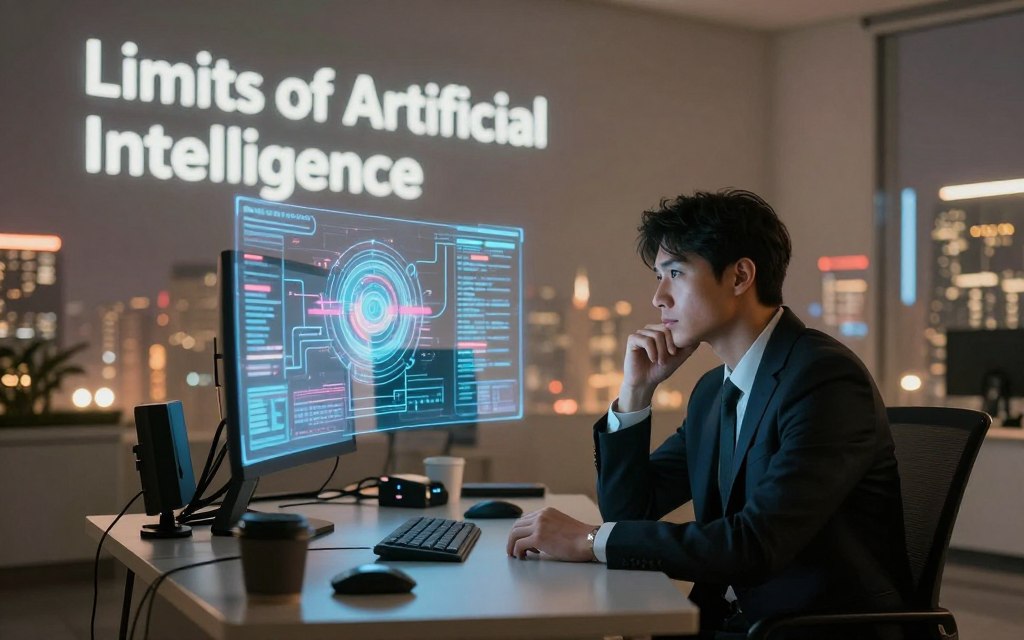

Artificial intelligence has changed our world by analyzing information, creating content, and recognizing patterns. Yet AI lacks qualities that shape human experience, including consciousness, emotional depth, and moral responsibility. This article examines what can humans do that ai can’t and compares human abilities vs AI.
AI excels in speed, memory, and processing vast amounts of data, but it struggles with empathy, context, and authentic relationships. Understanding the limits of artificial intelligence helps people, businesses, educators, and policymakers use technology responsibly. We will explore emotional intelligence, creativity, ethics, common sense, physical dexterity, adaptability, consciousness, and collaboration.
These differences show human strengths while recognizing AI’s valuable contributions to our lives.
Key Takeaways
- AI can analyze data quickly but lacks emotional understanding.
- Humans excel in empathy and moral reasoning.
- Understanding AI’s limits helps in responsible technology use.
- Collaboration between humans and AI can enhance productivity.
- Creativity and contextual judgment remain human strengths.
The Fundamental Differences Between Human Cognition and AI Processing
Comparing human cognition vs AI shows what each does well. Both analyze information, but they use very different methods.
How AI Systems Process Information
How AI processes information depends on algorithms and numerical representations. AI finds statistical patterns in large datasets and creates outputs from training data, model architecture, and optimization procedures. AI does not “understand” information like humans do; fluent responses still lack deep human comprehension.
The Role of Biological Neural Networks
Human cognition uses biological neural networks, with interconnected brain regions shaped by perception, memory, emotion, and social experiences. Humans combine sensory information with personal history and goals, creating a rich understanding of the world, unlike AI. AI relies only on provided data and instructions.
These differences become clearer through the following aspects:
- Speed: AI can process information at remarkable speeds, far exceeding human capabilities.
- Memory: While AI can store vast amounts of data, human memory is influenced by emotions and experiences.
- Pattern Recognition: Both humans and AI can recognize patterns, but humans do so with contextual understanding.
- Generalization: Humans excel at generalizing from limited experiences, while AI requires extensive data.
- Lived Experience: Human understanding is enriched by personal experiences, which AI lacks.
Emotional Intelligence and Empathy: What Can Humans Do That AI Can’t
Unlike AI, humans have AI and empathy. We notice subtle feelings beyond words through experience and careful attention.
Reading Nonverbal Cues and Emotional Nuance
Reading nonverbal cues helps humans connect with others. These signals include:
- Facial Expressions and Body Language
- Tone of Voice and Vocal Patterns
Facial Expressions and Body Language
Facial expressions, eye contact, and posture can show feelings that words do not express. A small change may suggest discomfort or joy, while gestures and personal space vary across cultures.
Tone of Voice and Vocal Patterns
A voice’s tone can reveal fear, sadness, or confidence. Pauses, volume changes, and rhythm shape how we understand a message. AI can analyze these patterns, but cannot feel the emotions behind them.
Providing Genuine Compassion in Difficult Times
During hard times, humans can offer genuine compassion that AI cannot copy. Counseling and caregiving require emotional connection, shared vulnerability, and moral responsibility. A comforting presence can support healing and show why human empathy matters.
AI may copy supportive language, but it cannot feel true concern or affection. Human relationships grow from emotional depth, which AI cannot honestly provide. Emotional intelligence in humans helps us connect, understand, and respond with genuine compassion.
Creative Thinking and Original Artistic Expression
Comparing human creativity vs AI shows where people shine. It includes imaginative storytelling and original artistic expression, shaped by personal experience and emotion. AI can make art, but it often lacks the human purpose and experience behind true creativity.
In imaginative storytelling, writers use ambiguity, symbols, and personal observations to share deeper meaning. They build stories from emotions, cultural backgrounds, and personal journeys. This human touch helps stories connect with readers, giving them authenticity and relatability beyond AI-generated content.
In breakthrough innovation in science and design, human creators connect observations that seem unrelated. They define new problems, take intellectual risks, and test their ideas in the real world. This creative problem-solving draws on personal insight and culture to challenge conventions and push boundaries.
AI is a powerful tool for generating ideas and drafts, but people must guide, choose, revise, and interpret its work. Authorship and cultural context give creative work purpose and show a conscious point of view. Together, human creativity and AI can support collaboration and innovation.
Moral Reasoning and Ethical Judgment
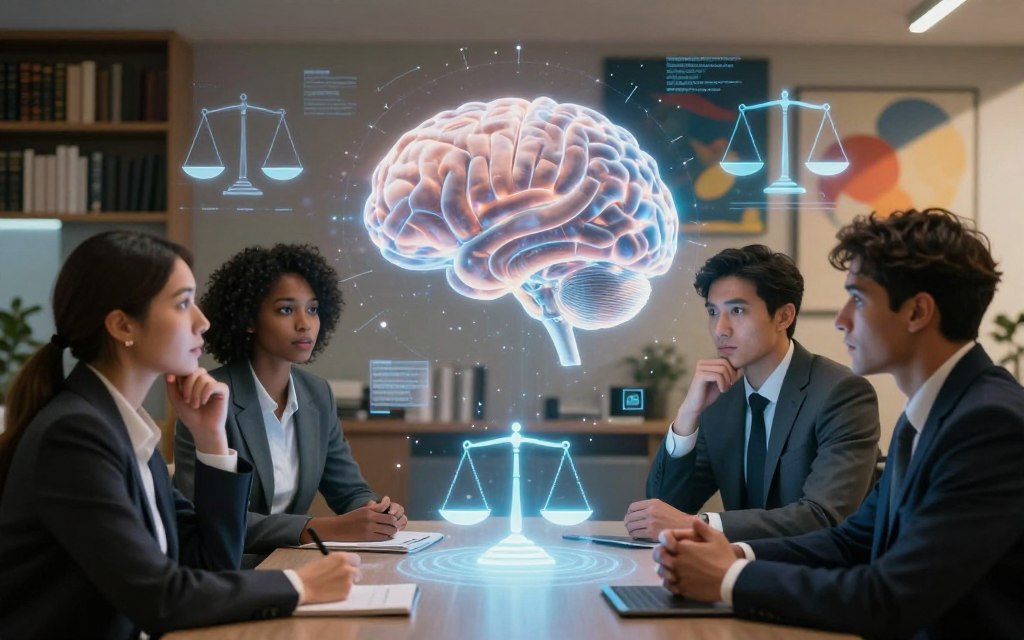
Human moral reasoning combines values, emotions, and social norms that AI cannot fully copy. This process matters when people face moral dilemmas and AI offers no clear rules. People must decide when values conflict, facts are incomplete, and every choice may cause harm.
For example, consider sharing scarce medical resources during a crisis. Healthcare professionals must balance individual needs with society’s overall benefit. This case shows why moral dilemmas require deep knowledge of human values and social effects.
Navigating Complex Moral Dilemmas
When privacy conflicts with public safety, ethical judgment becomes essential. Responding to a vulnerable employee requires attention to human relationships and compassion. AI can study data and suggest results, but people remain responsible for these decisions.
Cultural Sensitivity and Value-Based Decisions
Community norms, history, and power dynamics strongly shape ethical choices. Decision-makers must consider the dignity and fairness of affected people. AI systems may repeat training-data biases and reflect assumptions built into their design.
Transparency and human oversight are essential for AI ethics. Stakeholder participation brings diverse views into ethical decisions. Though not always unbiased, humans can feel remorse, accept accountability, revise values, and show moral commitment beyond automated systems.
| Aspect | Humans | AI |
|---|---|---|
| Emotional Nuance | Deep understanding of feelings | Limited emotional recognition |
| Accountability | Can accept responsibility | No personal accountability |
| Value Revision | Ability to change beliefs | Fixed algorithms |
| Cultural Sensitivity | Adapts to social contexts | May reflect biases |
Contextual Understanding and Common Sense
Humans excel at contextual understanding, while AI often struggles with it. This skill helps people interpret situations without every detail being stated. People combine language, surroundings, social expectations, and past experiences to find meaning, but AI still finds this skill difficult.
Real-World Situations Beyond Training Data
People can adapt when circumstances change without warning. If a familiar rule no longer applies, they may spot a safety risk in following it literally. They can also handle an unusual customer request with grace and adjust plans when bad weather disrupts them.
Implicit Knowledge and Tacit Understanding
Implicit knowledge is understanding that can be hard to explain. Knowing when a joke is inappropriate or sensing tension in a meeting requires deep social awareness. Skilled craftspersons adjust by feel, showing tacit knowledge that AI lacks.
AI may show common sense from vast data, yet it makes confident errors in unusual contexts when assumptions stay hidden.
Human context awareness is more than pattern recognition; it connects decisions to consequences and social relationships. People learn from experience, guiding real-world reasoning, while AI relies on text patterns and struggles in complex human settings.
Physical Dexterity and Embodied Intelligence
Embodied intelligence shows how human dexterity supports physical tasks that AI struggles to copy. Humans use vision, touch, balance, proprioception, and muscle feedback to move through and handle the physical world. This mix of skills helps us complete delicate tasks with care and precision.
Fine Motor Skills in Healthcare and Crafts
Healthcare and crafts need fine motor skills, while AI in healthcare and crafts still faces physical limits. A surgeon performing a delicate operation or a dentist completing precise dental procedures needs skill, texture awareness, and a feel for resistance.
Other examples include:
- Repairing a watch, where tiny components must be handled with extreme care.
- Shaping pottery, which demands a keen sense of touch and control.
- Playing a musical instrument, where subtle finger movements create beautiful melodies.
- Adjusting a tool based on tactile feedback to achieve the desired outcome.
Robots can perform controlled tasks, but unpredictable environments often challenge them. Objects vary, conditions change, and safe movement requires human judgment and adaptability.
Adaptive Movement in Dynamic Environments
Humans excel at adaptive movement, especially in changing settings. We can cross uneven ground, catch an unexpected object, or help a patient who loses balance. Moving through a crowded room while tracking several risks shows how we adjust our movements in real time.
This physical skill grows through practice, sensory feedback, and constant adjustment. Although AI-powered robotics can extend human abilities and improve precision, they often struggle with unfamiliar objects or unclear goals. As a result, the unique combination of human dexterity and embodied intelligence remains unmatched.
Genuine Relationship Building and Social Connection
Human relationships grow through trust, empathy, and shared experiences, which AI cannot copy. Real social connection needs deep understanding and emotional care that AI lacks. These bonds grow through mutual recognition, reliability, and the chance to create meaningful change.
Trust and Long-Term Interpersonal Bonds
People build trust through many actions, including keeping promises, respecting boundaries, and remembering important experiences. These actions strengthen interpersonal bonds, while repairing harm helps relationships survive. Over time, steady care creates reliability.
AI can imitate conversational warmth and remember user preferences, but it cannot form relationships with personal needs or real commitment. A teacher who remembers a student’s struggles and offers support creates a deeper bond than AI answers. This shows the heart of trust building in human relationships.
Leadership and Team Motivation
Effective leaders shape team dynamics by reading morale, sharing purpose, and resolving conflicts. They also recognize individual strengths.
In uncertain times, leaders must inspire. Employees follow leaders not only for instructions, but also for character and a shared mission.
AI tools can support workforce analysis and decisions, but human leaders carry emotional connection and accountability. For example, a community organization leader who rallies support during a crisis shows human leadership, social connection, and trust.
| Key Elements | Human Interaction | AI Interaction |
|---|---|---|
| Trust Building | Developed through shared experiences | Simulated responses |
| Emotional Engagement | Genuine empathy and understanding | Lacks true emotional depth |
| Leadership | Inspires and motivates teams | Provides data-driven insights |
“People don’t care how much you know until they know how much you care.”
In workplaces, classrooms, and families, social connection grows through credibility and lived experience. As AI shapes more of our world, understanding human relationships and AI helps us value genuine human bonds. For further insights, explore this resource.
Adaptability in Unpredictable Real-World Situations
Humans show strong human adaptability in unpredictable situations, often exceeding AI flexibility. This skill matters when novel challenges demand quick, effective responses. Unlike AI, humans define problems in real time and choose useful information.
During natural disasters or sudden market disruptions, people think on their feet. They ask for help, use available resources, and change goals as conditions shift. For example, a nurse may adjust her care for a child in an unfamiliar setting, using instincts and past experiences.
Responding to Novel Challenges
During unprecedented events, people use emotional resilience and practical judgment. They assess conditions, set priorities, and organize resources well. This novel problem-solving helps them manage uncertainty, while AI may fail without clear rules or enough data.
Learning from Limited Experience
Humans can learn from limited experience. A single event, conversation, or mistake can offer insights for future choices. For example, a business leader may change strategies after one market shift and use that lesson in similar situations.
AI can improve through retraining, but its results depend heavily on data quality and relevance.
This table summarizes key differences between human adaptability and AI limitations in the real world:
| Aspect | Human Adaptability | AI Limitations |
|---|---|---|
| Problem Definition | Real-time assessment and flexibility | Dependent on predefined algorithms |
| Resource Utilization | Improvisation with available resources | Limited to programmed responses |
| Learning | Draws lessons from individual experiences | Requires extensive data for improvement |
| Emotional Resilience | Utilizes emotional intelligence | Lacks emotional understanding |
AI can assist with scenario analysis, but human oversight remains essential in uncertain settings. A blend of emotional intelligence, curiosity, and practical judgment supports learning from experience. These qualities help people adapt and thrive in complex real-world situations.
Consciousness, Self-Awareness, and Subjective Experience
Consciousness raises deep questions about human experience and AI consciousness. The philosophy of artificial intelligence asks about the hard problem of consciousness. It asks how brain processes create subjective experience, including pain, color, pleasure, and awareness.
AI can simulate emotional responses and describe feelings, but no evidence confirms genuine internal experiences. Researchers and philosophers debate whether machine consciousness is possible. They ask whether AI truly feels emotions or only mimics human behavior without inner awareness.
Another crucial aspect is personal identity and reflective thinking. Humans combine memories, values, and experiences to build a sense of self. This ongoing story supports human self-awareness and helps people imagine their future selves.
AI may keep a consistent conversational identity, but it cannot truly reflect on itself. Its identity representations are functional and do not equal a confirmed subjective experience. Separating convincing simulation from real consciousness remains a major challenge when we study AI’s limits.
Collaborative Human-AI Approaches for the Future
The future of technology is bright when we embrace human-AI collaboration. This partnership moves beyond competition by combining human strengths with artificial intelligence to expand what we can do. By adding AI tools across sectors, we can improve productivity and efficiency.
AI augmentation has many uses across daily work and professional fields. AI can summarize research, translate complex information, spot patterns in large datasets, and create first drafts for creative projects. It also supports people with disabilities and helps medical professionals diagnose and treat patients. Human experts must set goals, check results, and judge their real-world use.
Moving toward an ethical AI partnership is vital for responsible AI use. Organizations must protect privacy, gain informed consent, explain decisions, test for bias, and secure data. They should document AI use, set rules for human review, let people challenge automated decisions, and track outcomes over time.
AI excels at speed, scale, and repetitive analysis, while humans bring judgment, empathy, creativity, and moral leadership. Together, they can build a balanced, responsible future where technology complements human skills and supports innovation.
Conclusion
As we ask what can humans do that AI can’t, our unique abilities set us apart. Humans show genuine empathy, accept moral responsibility, and build authentic relationships. These uniquely human skills help us navigate complex life, which AI struggles to replicate.
The future of AI and humanity depends on recognizing the limits of AI. Machines process data quickly and detect patterns, but they lack human emotional depth and context. This difference does not reduce AI’s value; it shows why AI should support, not replace, human judgment.
As we move forward, we must judge AI systems by their purpose and social effects. The best approach uses AI’s strengths while keeping human oversight in decisions. This balance keeps ethical choices and meaningful relationships in human hands, allowing technology and human experience to coexist harmoniously.


 By
By